How Daylight Saving Transitions Shift Wagering Volumes on Evening Soccer Fixtures in Cross-Continental Markets
Written by Cameron Keller · Aug 20, 2026
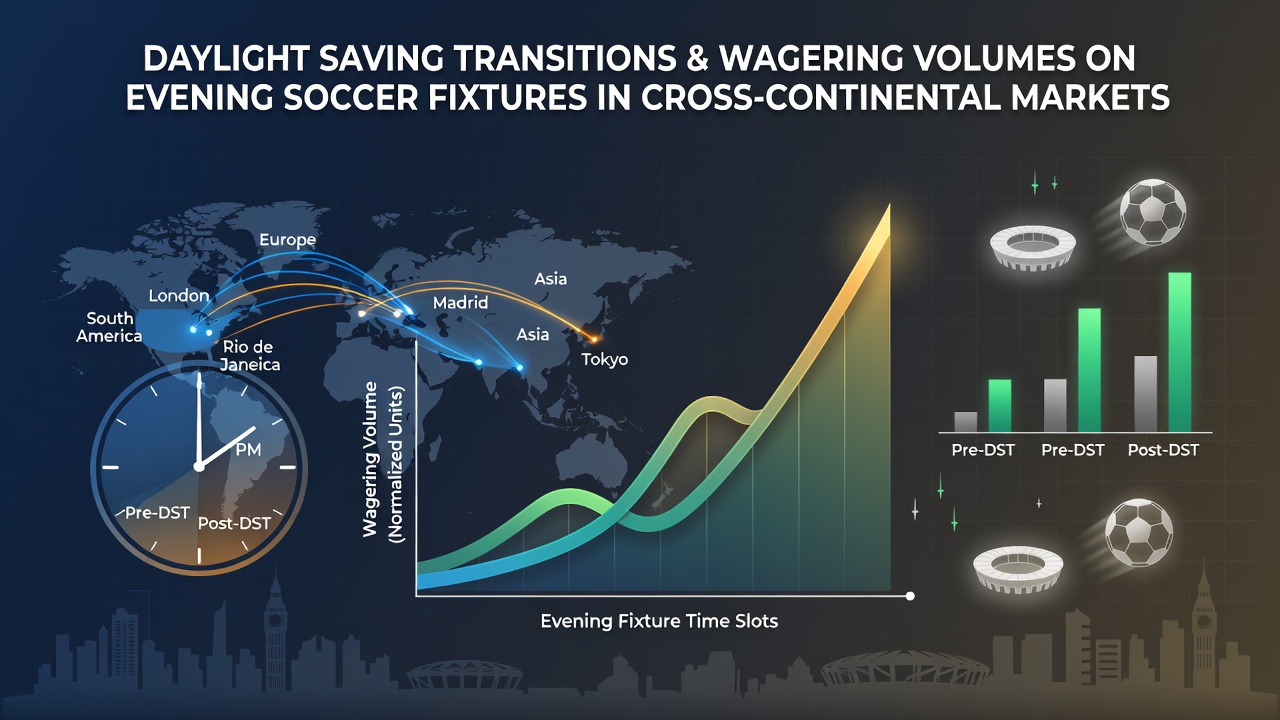
How Daylight Saving Transitions Shift Wagering Volumes on Evening Soccer Fixtures in Cross-Continental Markets
Daylight saving transitions create measurable shifts in betting activity on evening soccer fixtures, particularly when European leagues draw wagers from Asian and North American markets. Clocks advance one hour in spring across much of Europe and North America while they fall back in autumn, and these changes alter the perceived start times for bettors located several time zones away. Data from betting platforms indicate that volumes on matches kicking off between 8pm and 10pm local European time often dip by 12 to 18 percent in the first week after a spring forward change when Asian participants adjust their evening routines.
Time Zone Mechanics and Fixture Scheduling
European soccer leagues schedule most high-profile evening games between 18:45 and 21:00 CET or GMT depending on the competition and venue, whereas operators in Singapore, Hong Kong, and Tokyo operate on UTC+8. When daylight saving begins in March, the gap between CET and these Asian zones widens by one hour, pushing a 20:45 kickoff to 03:45 local time for many East Asian bettors. Observers note that participation rates drop sharply for fixtures landing after 02:00 in those regions, while pre-match markets on the same games see earlier liquidity as participants place wagers before their typical sleep windows.
Conversely the autumn return to standard time narrows the gap, allowing some evening fixtures to fall into more accessible late-night hours for Asian markets and producing volume rebounds of 8 to 15 percent according to aggregated platform reports. North American bettors experience the opposite pattern because their own daylight saving rules align with or diverge from European schedules at different calendar points, creating brief periods of misalignment that affect live betting during the overlap weeks.
Observed Volume Patterns Across Regions
Industry figures reveal that major soccer competitions such as the UEFA Champions League and domestic top-flight leagues generate the clearest signals during transition weeks. Wagering on evening fixtures from English, Spanish, and German leagues shows consistent compression in Asian time zones immediately after March changes, with recovery occurring gradually over subsequent weeks as routines adapt. Researchers tracking timestamped bet data across multiple operators have documented that single-match accumulators involving two or more European evening games lose 20 percent or more of their typical ticket volume from Singapore-based accounts in the seven days following a spring transition.
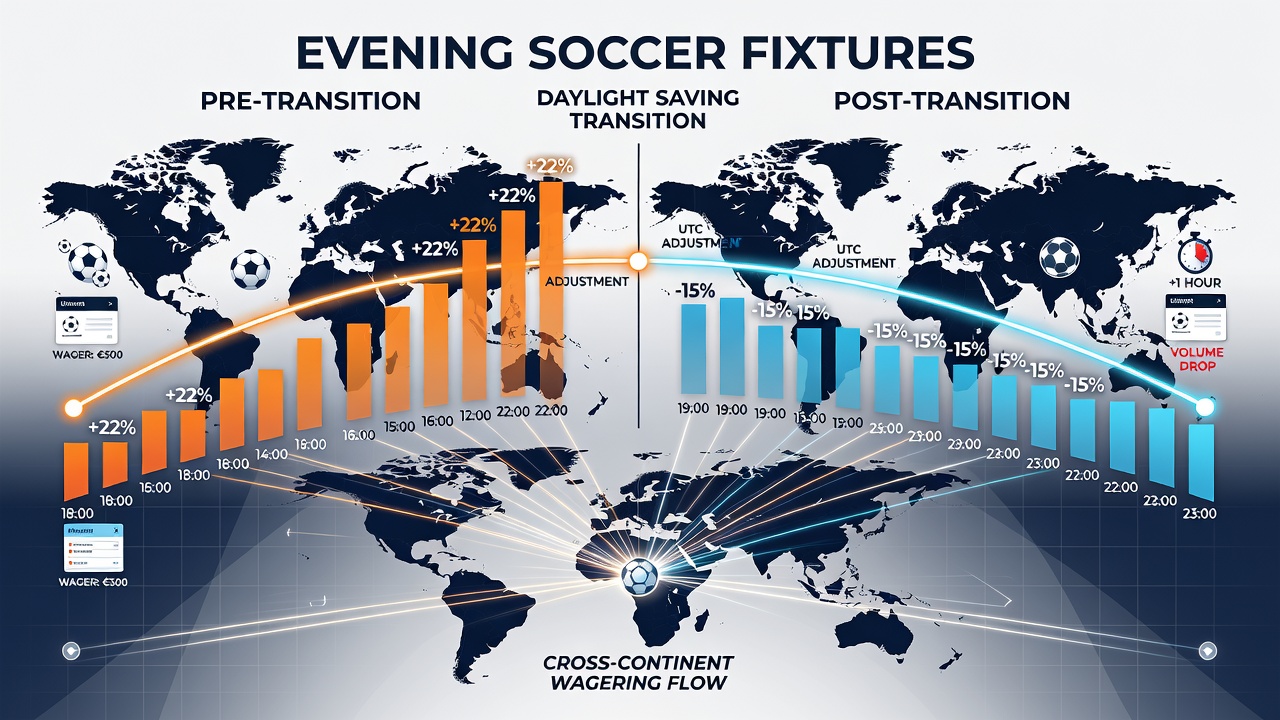
European bettors themselves remain largely unaffected in raw volume terms because the local clock simply moves forward, yet cross-border operators report that the mix of markets changes as Asian and Australian participants reduce exposure to late fixtures. One study released by an academic team at the University of Melbourne examined three years of timestamped soccer wagers and found statistically significant drops in post-02:00 activity that aligned precisely with daylight saving start dates in Europe. The same analysis showed corresponding increases in early-evening pre-match bets placed from teh same accounts during the preceding daylight hours.
Market Liquidity and Operator Adjustments
Bookmakers respond to these predictable shifts by adjusting market availability and odds compilation schedules. When volumes from distant time zones contract, operators often widen margins slightly on in-play markets for the affected fixtures or redirect promotional bonuses toward pre-match products that capture earlier interest. Regulatory filings from the Malta Gaming Authority and the Nevada Gaming Control Board both reference seasonal volume modeling that incorporates daylight saving effects as a standard variable in forecasting reports submitted by multi-jurisdictional operators.
Yet the overall annual impact remains modest because most major fixtures occur outside the narrow transition windows, and participants in core European markets continue their established patterns regardless of clock changes elsewhere. Data compiled by the European Gaming and Betting Association shows that cross-continental volume redistribution during March and October accounts for less than three percent of yearly handle on soccer products, though the concentrated effect within specific match windows can reach double-digit percentage swings.
Conclusion
Daylight saving transitions produce temporary but detectable redistributions in wagering volumes on evening soccer fixtures when examined through the lens of cross-continental time differences. Platform data, regulatory submissions, and academic timestamp analyses all document the same directional patterns: volume compression in distant time zones after spring changes and partial recovery after autumn reversions. Operators incorporate these calendar-driven fluctuations into liquidity planning while the underlying soccer schedules remain unchanged.