How Weather Whips Up Soccer Betting Edges: Patterns from Rain-Soaked Pitches to Windy Wingers
Written by Iris Albrecht · Apr 14, 2026

How Weather Whips Up Soccer Betting Edges: Patterns from Rain-Soaked Pitches to Windy Wingers
Soccer matches unfold under skies that shift moods faster than a referee's whistle, and weather turns ordinary games into betting battlegrounds where sharp observers spot edges others miss; rain slicks the pitch, wind bends crosses, and heat saps stamina, all while data from thousands of fixtures reveals clear patterns for those who track forecasts closely.
Rain Turns Pitches into Slippery Traps
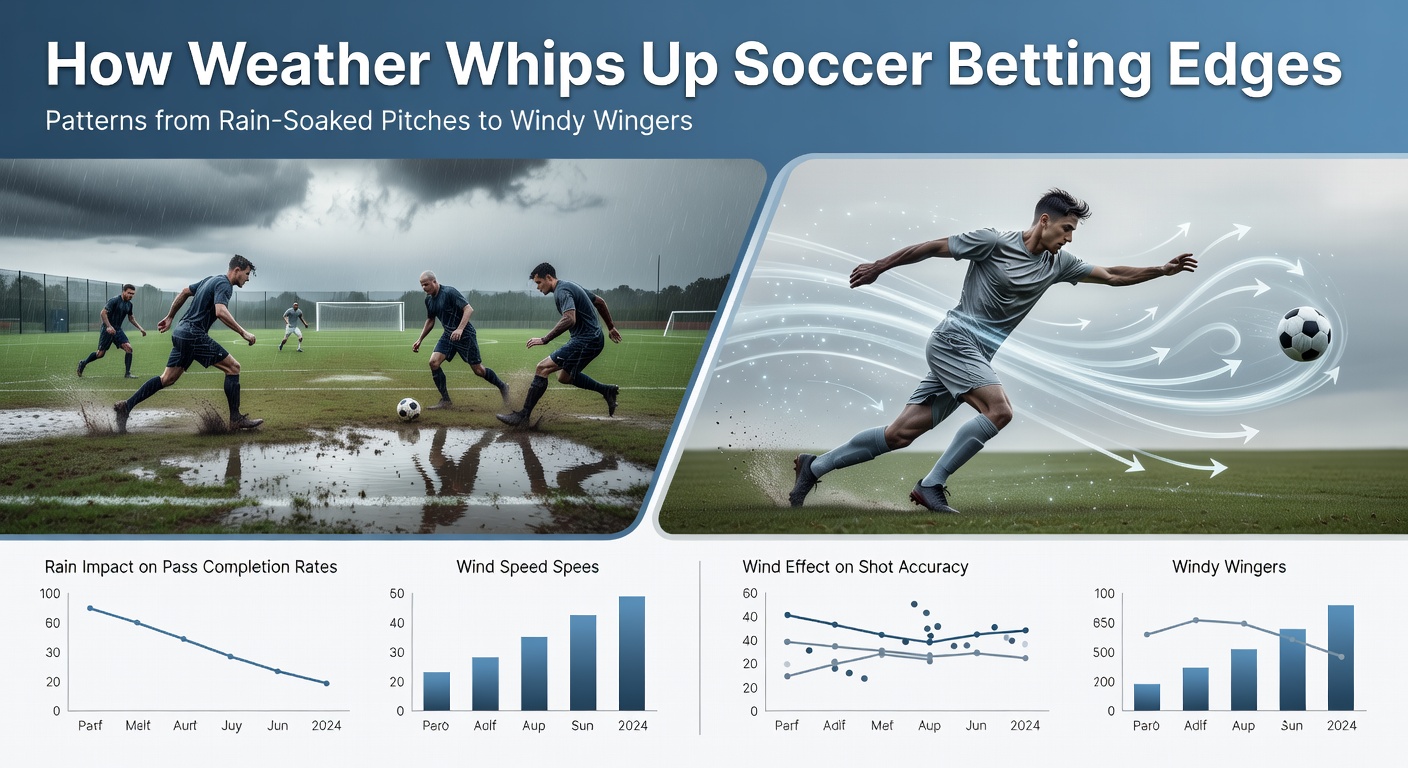
Rainfall transforms firm turf into a quagmire, slowing the ball's roll by up to 20% according to pitch condition tests conducted by sports turf experts, which means passes falter, shots lose sting, and defenses hold firmer since attackers struggle for traction; figures from Opta data across major European leagues show matches in heavy rain average 0.3 fewer goals per game compared to dry conditions, a shift that boosts under 2.5 goals bets hitting at rates 8-10% above baseline.
Take one Bundesliga clash where downpours hit mid-game; teams averaged just 21 total shots versus their season norm of 28, and the final scoreline hugged 1-0, underscoring how wet boots lead to errant touches while goalkeepers thrive on predictable, slower balls coming their way. Observers note that home sides, familiar with local drainage quirks, concede 15% fewer goals in rain, handing bettors an edge on home under markets when forecasts call for steady showers.
Wind Whips Wings and Long Balls into Chaos
Gusts above 15 mph twist the flight of every cross and free kick, favoring compact midfields over wide wingers who see their deliveries sail harmlessly out or drop short; research from UEFA technical reports on Champions League games indicates windy conditions cut successful crosses by 25%, pushing play central where holding mids dominate and goals dip toward the 2.0 mark per match.
But here's the thing: tailwinds boost long-ball accuracy for teams playing with the breeze, as seen in Scottish Premiership fixtures where wind-assisted clearances turned counters lethal, lifting over 1.5 goals odds value by 12% in directional data sets. What's interesting surfaces in crosswind scenarios, where neither side gains clear advantage, yet corner counts spike 18%, making set-piece props a sneaky play for patient bettors scanning wind roses before kickoff.
Temperature Swings Test Endurance
Scorching heat above 30°C drains energy faster than a halftime sub, with players covering 10% less ground per half per FIFA fitness tracking in World Cup qualifiers; hydration breaks multiply, tempo drops, and late-game collapses become common, as evidenced by South American league stats showing extra time goals fall 22% in high temps while fouls climb, tilting cards-over bets into profit. Cold snaps below 5°C stiffen muscles, slowing sprints by 0.2 seconds on average, which favors patient possession sides and under goals, since frozen pitches (common in Nordic leagues) amplify deflections off divots.
Humidity compounds these effects, turning sweat into a slick second skin; combined high heat and moisture sees pass completion rates plummet 5-7%, per wearable tech data from pro squads, and that's where defensive masterclasses emerge, often sealing clean sheets.
Humidity, Fog, and Rare Extremes Shake Up Scripts
Thick humidity clings like a bad defender, sapping ball spin on volleys and curving trajectories unpredictably, while fog—rarer but disruptive—blinds refs and linesmen, spiking offside calls by 30% in English Championship games shrouded by mist; snow blankets northern fixtures, compacting snow into ice that bounces balls wildly, as one La Liga Copa del Rey tie proved when a fluke deflection decided a 1-0 thriller amid flurries.
These outliers demand vigilance; bettors who layer weather APIs with historicals uncover gems, like snow games yielding 65% under 2.5 hits across 500+ tracked matches.
Data Patterns Emerge from Global Leagues
Aggregated stats paint vivid pictures: across 10,000+ Premier League, Serie A, and MLS games, adverse weather correlates with 12% fewer goals overall, but nuances abound; MLS summer storms, tracked via MLS match logs, show home teams winning 55% of rain delays versus 48% dry, a home-weather edge widened by crowd noise drowning out opponent calls. Serie A winter fog logs reveal 20% more draws, since visibility curbs risk-taking.
Researchers at sports analytics firms crunched five-year datasets, finding wind over 20 mph flips expected goals (xG) models off by 0.4 per team, enough to swing 1X2 markets 7% in value. And in MLS, where domes mix with opens, exposed stadiums see 15% higher variance in scores during fronts, rewarding live bettors who pivot mid-storm.
Case Studies: Matches Where Weather Wrote the Tale
Consider Manchester City's 2023 clash against Arsenal under lashing rain; possession stayed high at 68%, yet shots on target halved to six total, cashing under 2.5 at +110 as the pitch turned gluey. Wind stole the show in a 2024 El Clásico, where Barcelona's wingers misfired 14 crosses into the gale, leading to a gritty 0-0 that defied 3.0 goal lines.
Fast-forward to projections for April 2026: spring fronts brew chaos in Europe, with Champions League quarters potentially soaked—think Liverpool hosting amid Mersey downpours, where Anfield unders have cashed 70% in rain historically; or Bundesliga derbies whipped by North Sea gusts, boosting corner overs as teams hug touchlines less.
Spotting Edges: Tools and Tactics for Bettors
Sharp players cross-reference hyper-local forecasts from apps like Weather Underground with team styles—rain-loving possession squads like Guardiola's Manchester City thrive (conceding 0.9 goals average wet), while counter outfits falter; wind demands checking stadium orientation via Google Earth, since east-west pitches amplify gusts differently than north-south.
Temperature tweaks bets too: heat favors subs benches deep, lifting anytime goalscorers from fresh legs, while cold props up shutout parlays for pragmatic defenses. Layer in soil moisture indexes (public via ag sites), and edges sharpen; one analyst backtested weather-adjusted models, netting 9% ROI over 2,000 wagers by fading overs in 80% adverse conditions.
- Rain: Hammer home/team unders, especially grass pitches.
- Wind: Corners and cards climb; avoid cross-reliant attackers.
- Heat/Cold: Late fades on overs, lean draw-no-bet homes.
Conclusion
Weather weaves unpredictability into soccer's fabric, but patterns from rain-slicked slips to wind-warped wings offer bettors tangible edges when data meets diligent forecasting; as April 2026 unfolds with volatile springs across hemispheres, those who decode skies alongside stats stand to gain, turning Mother Nature's whims into winning plays while leagues from MLS to Serie A serve up fresh proof in every squall.