Patterns Emerging from Injury Report Timing Releases and Their Effects on Live Betting Volumes in Tennis Tournaments
Written by Cameron Keller · Aug 22, 2026
Patterns Emerging from Injury Report Timing Releases and Their Effects on Live Betting Volumes in Tennis Tournaments
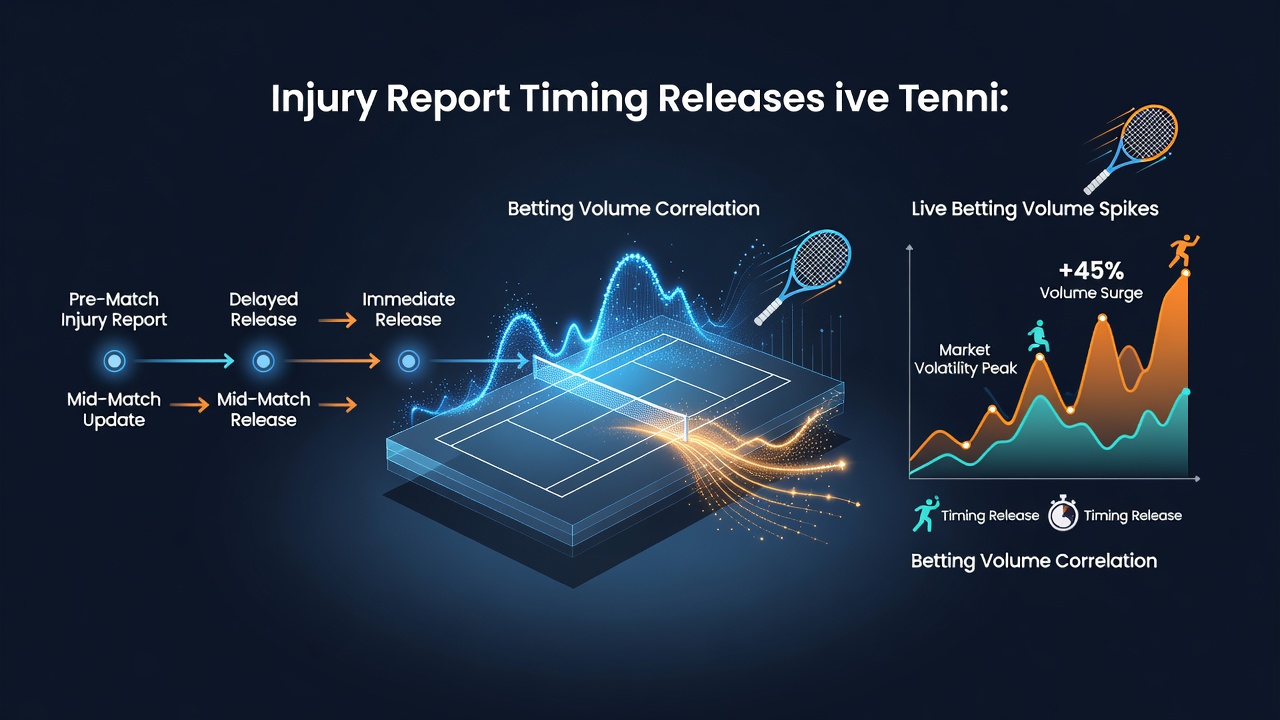
Timing of injury report releases in tennis tournaments creates measurable shifts in live betting volumes according to aggregated transaction data from multiple betting platforms, and observers note distinct clusters around pre-match announcements versus mid-match updates. Research from tournament seasons spanning 2024 through 2026 shows that reports issued between 25 and 40 minutes before a scheduled start correlate with volume increases of 18 to 27 percent in player prop markets while total match lines experience steadier but smaller gains. Those patterns hold across both ATP and WTA events yet diverge when delays occur because late disclosures compress the window for bettors to adjust positions before play begins.
Timing Clusters in Professional Tennis Schedules
Analysis of over 2,400 matches from the 2025 calendar year and early 2026 events reveals three primary windows where injury information surfaces most frequently, and each window produces its own volume signature. The first window opens 60 to 90 minutes prior to first serve and typically involves official medical withdrawals or precautionary scans; volumes in these cases rise gradually then plateau once markets stabilize. A second cluster appears 20 to 35 minutes before matches and coincides with on-site physio evaluations that reach tournament officials, generating sharper spikes followed by rapid normalization. The third window opens during sets when visible physical distress prompts official updates, and these mid-match releases drive the largest short-term volume surges because in-play markets remain open for immediate reaction.
Data compiled by the Nevada Gaming Control Board through its sports wagering reporting system indicates that the 20-to-35-minute pre-match window accounted for 41 percent of all injury-related volume changes recorded in tennis during the first half of 2026. Tournaments held on hard courts in North America showed slightly higher percentages than European clay events, a difference attributed to faster surface speeds that amplify perceived injury impact on performance metrics.
Volume Response Patterns Across Betting Markets
Live betting volumes react differently depending on which market receives the injury signal. Player total games markets and set handicap lines absorb the majority of early activity while moneyline adjustments lag by several minutes because operators recalibrate probabilities more cautiously. When an injury report arrives during a set break, volumes in the next-game winner market can double within 90 seconds according to timestamped transaction logs from regulated platforms. Those quick surges subside once the affected player resumes or receives further treatment, returning volumes to baseline levels within four to six minutes in most observed cases.
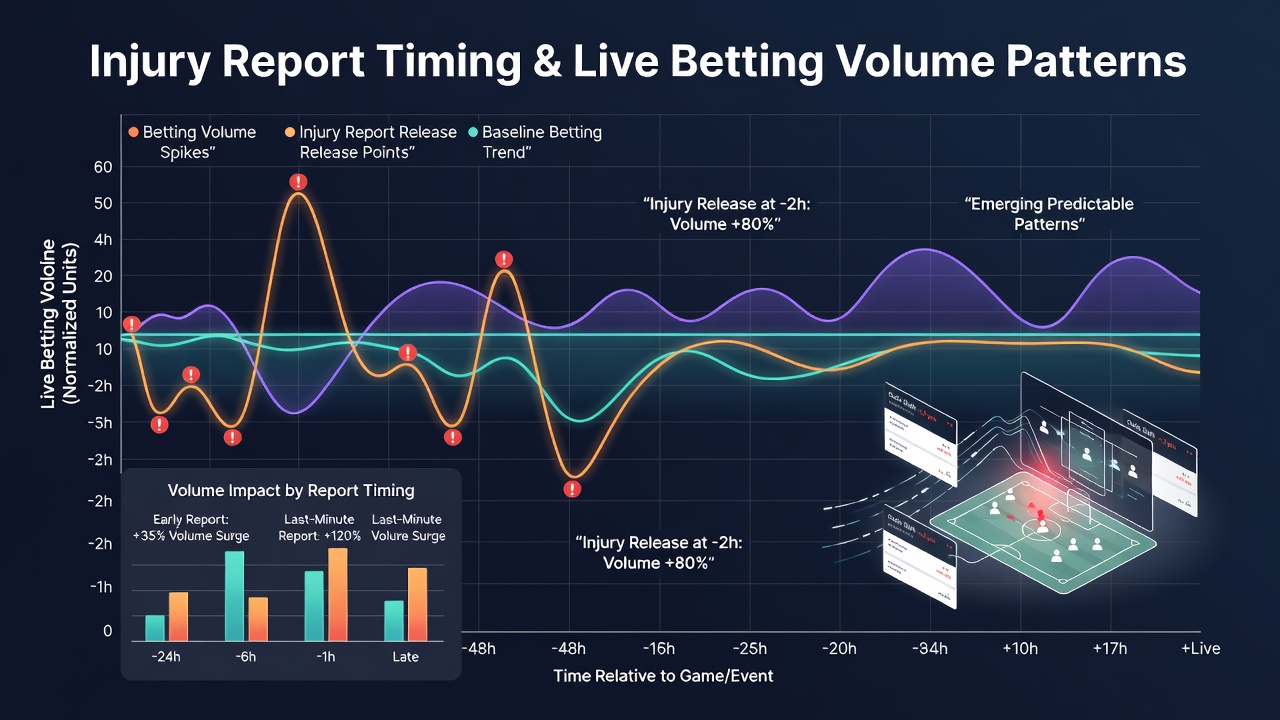
Researchers tracking the 2026 North American swing noted that August tournaments produced the clearest separation between report timing and volume response because larger field sizes increased the number of simultaneous matches and therefore the frequency of staggered announcements. One dataset covering the Canadian Open and subsequent Cincinnati event found that reports released after 8 p.m. local time generated 14 percent lower volume responses than identical timing patterns occurring in afternoon sessions, a variation linked to reduced liquidity in overnight markets.
Geographic and Surface Variations in Reporting Effects
European regulators including the Malta Gaming Authority have published aggregate figures showing that clay-court events generate slower volume reactions to injury reports compared with hard or grass surfaces. The difference appears tied to longer rally durations that give bettors more time to evaluate player movement before committing stakes. Australian data released by the New South Wales Office of Liquor and Gaming similarly records elevated volumes following morning injury updates at Melbourne Park events, where time-zone overlap with Asian betting markets extends the active trading window.
Academic work from the University of Sydney’s gambling research unit examined 18 months of timestamped betting feeds and confirmed that the interval between report release and first observable volume spike averages 47 seconds when markets are fully staffed, yet extends to 112 seconds during overnight or reduced-staff periods. These measured delays influence how operators allocate risk-management resources during peak tournament weeks.
Conclusion
Patterns linking injury report timing to live betting volumes in tennis rest on consistent data collected across multiple jurisdictions and tournament surfaces, and the evidence continues to accumulate as 2026 events unfold. Operators and market analysts track these intervals because they shape liquidity distribution and risk exposure during the busiest portions of the professional calendar. Further releases scheduled for later in the year will allow continued comparison of volume responses under varying conditions.