Screen Update Speeds Correlating with Pause Durations in State-Sanctioned Electronic Poker Applications
Written by Iris Albrecht · Aug 27, 2026
Screen Update Speeds Correlating with Pause Durations in State-Sanctioned Electronic Poker Applications
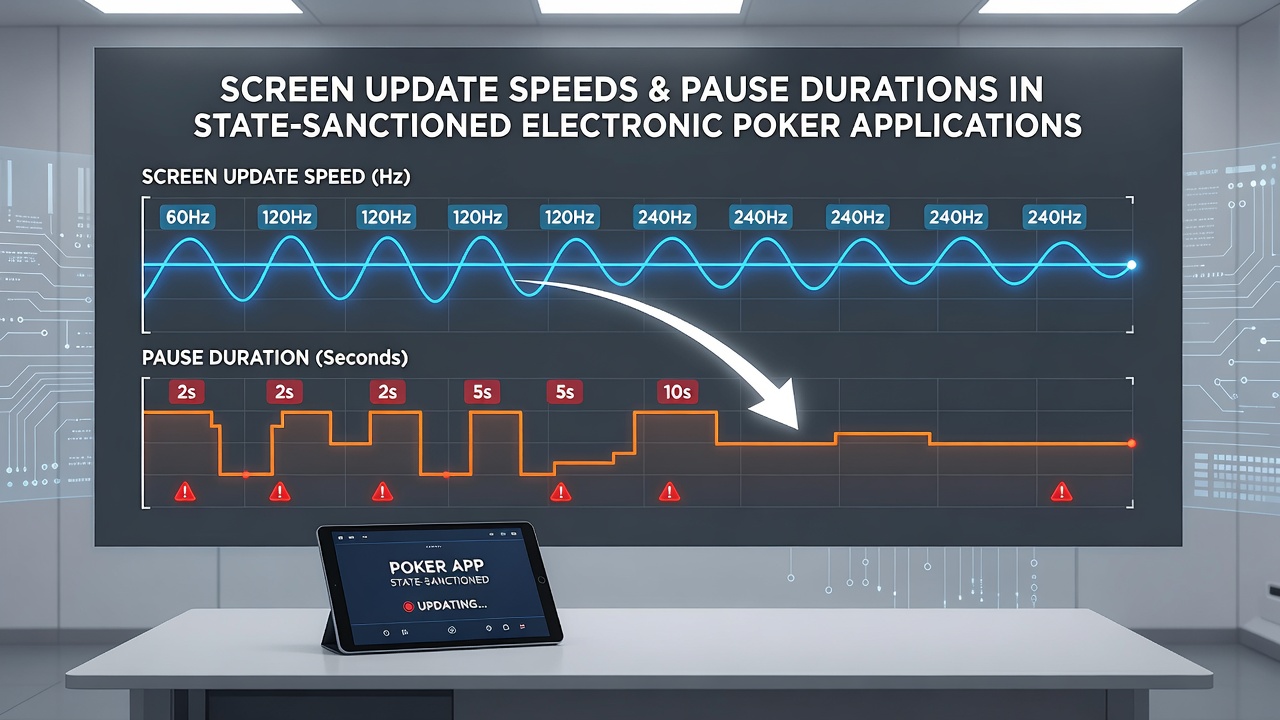
State-sanctioned electronic poker applications operate under strict technical standards that govern everything from random number generation to interface performance, and recent analyses have begun examining how screen update speeds interact with the pauses players insert between decisions. Regulators in multiple jurisdictions track these metrics because they tie directly into system certification requirements and player behavior logging protocols.
Technical Framework Behind Screen Performance
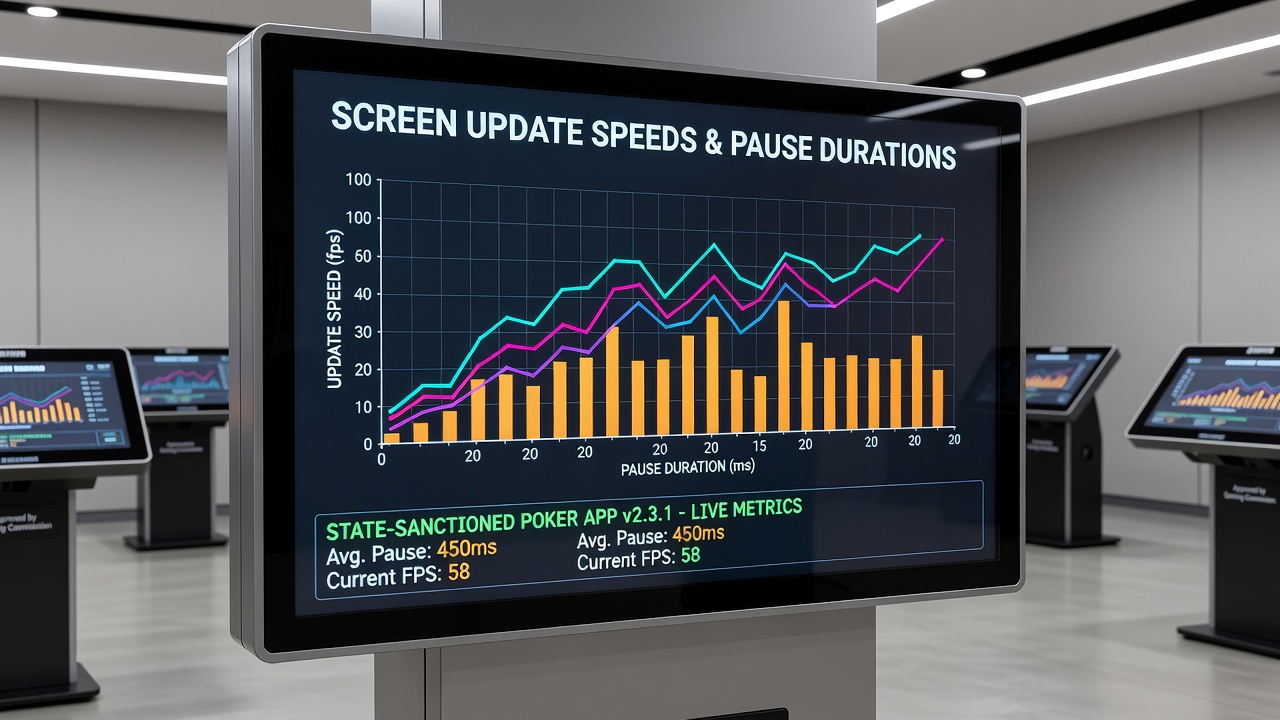
Electronic poker platforms refresh visual elements at intervals measured in milliseconds, with certified systems typically maintaining update cycles between 16 and 33 milliseconds to align with common display refresh rates. These cycles determine how quickly card animations, bet confirmations, and result displays appear after a player commits an action. Data collected across licensed networks shows that slower update intervals often coincide with extended pauses, while tighter refresh windows tend to compress the time between consecutive player inputs.
Developers achieve these speeds through optimized rendering pipelines that separate game logic from visual output, allowing the application to process decisions independently of graphical transitions. In practice, when update speeds drop below certain thresholds, players encounter brief visual lags that interrupt the flow of decision-making sequences.
Observed Correlations in Pause Data
Research conducted on regulated platforms during the first half of 2026 revealed measurable links between refresh performance and pause length. One dataset compiled from multi-state networks indicated that applications maintaining sub-20 millisecond updates recorded average pauses of 4.2 seconds between betting rounds, whereas systems operating near 30 milliseconds showed averages climbing to 6.8 seconds. These figures emerged after controlling for game variant, stake level, and time of day.
Analysts attribute the pattern to reduced cognitive friction when visual feedback arrives promptly, allowing participants to maintain momentum through repeated decision cycles. Conversely, delayed updates appear to prompt additional verification steps as players wait for confirmation that their action registered correctly.
Regulatory Monitoring and Certification Standards
The Nevada Gaming Control Board requires all certified electronic poker applications to log both update intervals and player action timestamps as part of ongoing compliance audits. Similar provisions appear in guidelines issued by the Alcohol and Gaming Commission of Ontario, which began mandating granular performance reporting in late 2025. These records feed into broader studies that examine whether technical characteristics influence session duration or decision consistency.
Figures released in August 2026 from the Australian Communications and Media Authority highlighted comparable trends in licensed digital card rooms, noting that platforms with consistent sub-25 millisecond updates sustained higher volumes of hands per hour without corresponding increases in error rates. Regulators continue to review whether minimum update speed thresholds should enter formal technical standards alongside existing randomness and security criteria.
Regional Variations and Platform Comparisons
Differences emerge when comparing implementations across jurisdictions. European platforms operating under Malta Gaming Authority oversight frequently employ adaptive refresh systems that scale based on connection quality, producing variable pause patterns depending on network conditions. North American systems, by contrast, tend toward fixed high-speed rendering with less fluctuation once a session stabilizes.
Cross-platform studies have started mapping these variations against player migration data to determine whether technical performance influences retention across different regulatory environments. Early indicators suggest that consistent update speeds correlate with steadier engagement metrics regardless of geographic location.
Future Directions in Performance Tracking
Industry groups such as the International Association of Gaming Regulators have begun coordinating data-sharing protocols to standardize how update speeds and pause durations are measured across borders. These efforts aim to produce comparable datasets that can inform future certification updates and help identify whether certain technical configurations produce unintended behavioral effects.
Continued monitoring through 2026 and beyond will likely focus on emerging display technologies and their impact on the same performance variables already under review.
Conclusion
Available evidence from multiple regulatory sources demonstrates clear statistical relationships between screen update speeds and the lengths of pauses recorded in state-sanctioned electronic poker applications. As monitoring systems grow more sophisticated, these correlations provide regulators and operators with additional metrics for evaluating platform performance and maintaining compliance with evolving technical standards.