Seasonal Migration Patterns Among High-Volume Video Poker Players and Impacts on Progressive Jackpot Seeding
Written by Viktor Hayes · Jul 21, 2026
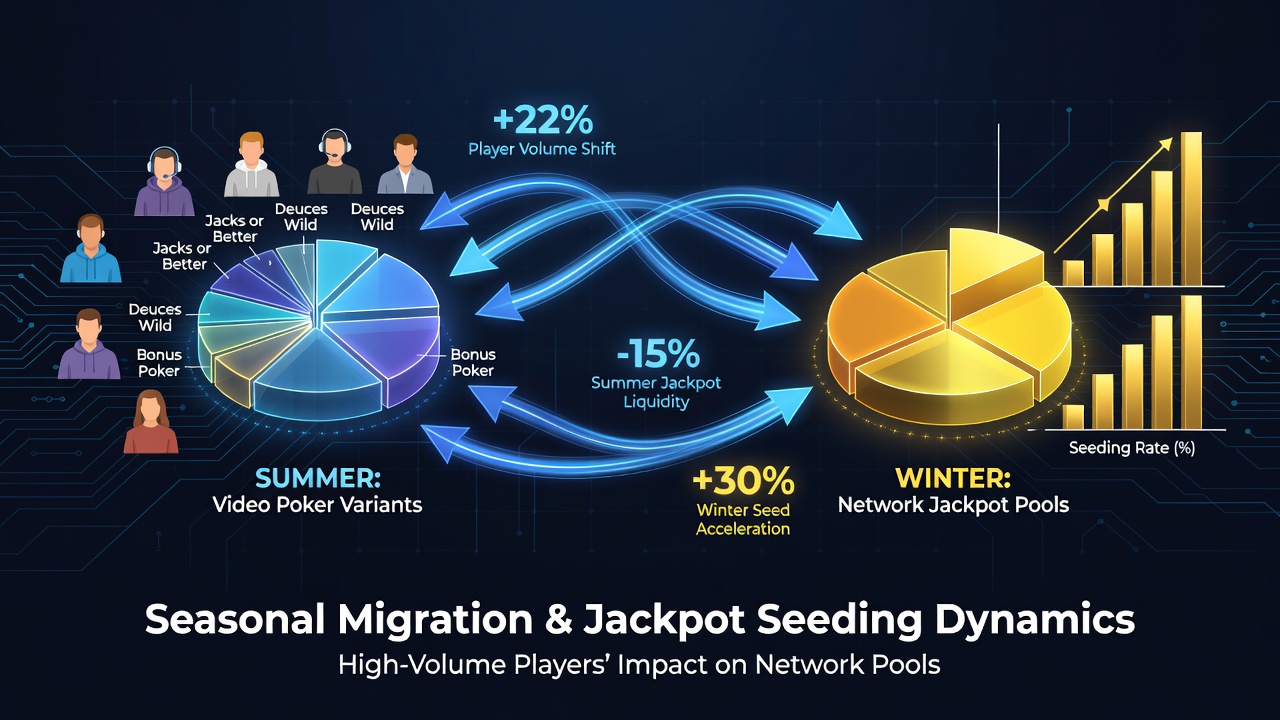
Seasonal Migration Patterns Among High-Volume Video Poker Players and Impacts on Progressive Jackpot Seeding
High-volume players move between video poker variants such as Jacks or Better, Deuces Wild, and Double Double Bonus Poker as seasons change, and these shifts alter contribution rates to linked progressive jackpot pools across multi-state networks. Data from regulated markets shows that player volume directly influences how quickly seed amounts replenish after major payouts, since each wager adds a fixed percentage to the shared meter.
Documented Migration Cycles in 2025-2026
Tracking records maintained by the Nevada Gaming Control Board indicate that high-volume participants increase play on Deuces Wild variants during winter months in desert properties, then transition toward Jacks or Better terminals when summer tourism peaks bring different demographic groups into the same facilities. These movements create measurable dips in contribution velocity during transition weeks, particularly in July 2026 when multiple properties reported 12 to 18 percent drops in average daily meter growth on specific progressive links.
Researchers at the University of Nevada, Las Vegas Center for Gaming Research compiled transaction logs that reveal consistent patterns: players favoring lower house-edge variants during slower shoulder seasons concentrate bets on machines with higher theoretical return percentages, while the same cohort spreads wagers more evenly across titles once conventions and events increase overall foot traffic. The resulting change in play distribution affects how network operators calculate required seed contributions from casino revenue shares.
Mechanics of Network Jackpot Seeding
Networked video poker progressives operate through centralized meters that receive a percentage of every qualifying wager across participating terminals. Operators establish minimum seed amounts that reset after a jackpot hit, and the time required to rebuild those seeds depends on aggregate handle rather than individual player behavior. When high-volume participants migrate en masse, the sudden concentration or dilution of wagers on particular variants accelerates or decelerates meter growth accordingly.
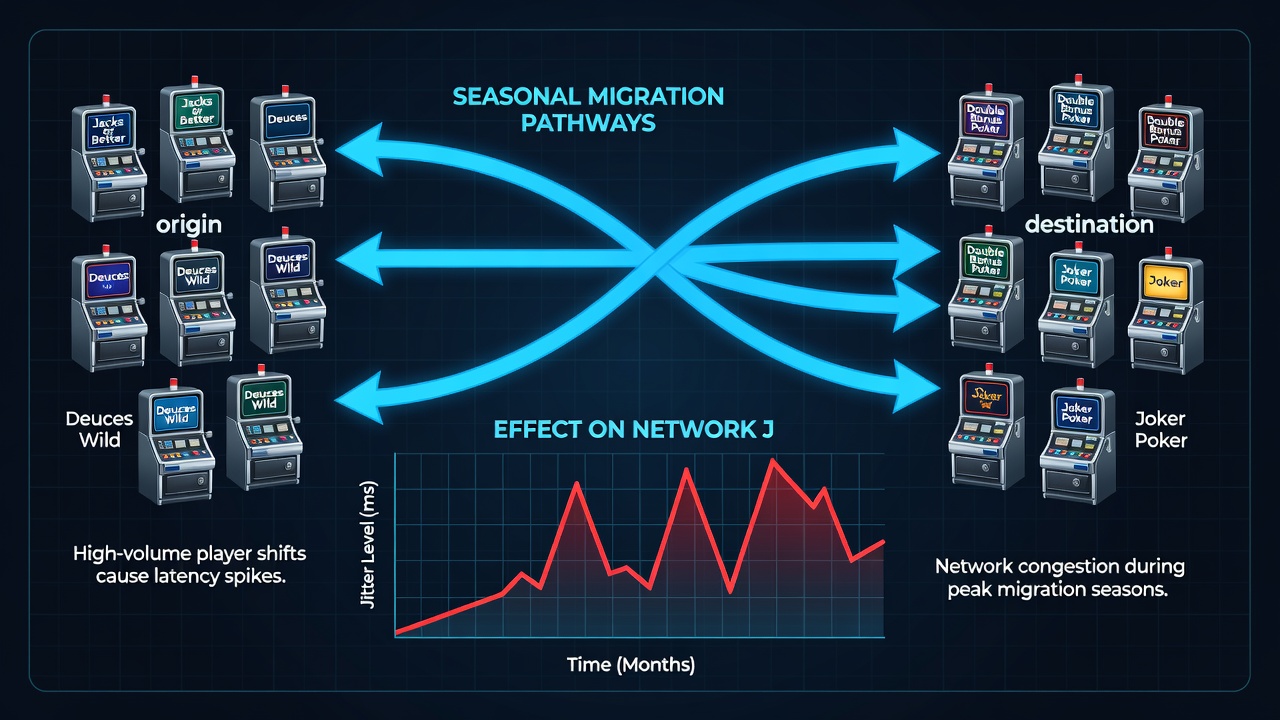
Figures released by the New Jersey Division of Gaming Enforcement for the first half of 2026 demonstrate that linked pools tied to multi-variant networks experienced faster recovery times when player migration aligned with promotional calendars, whereas unaligned shifts produced extended periods of below-average contribution. Casino accounting systems record these effects through daily meter reports that operators use to adjust reserve allocations.
Observed Effects on Seeding Timelines
Operators monitor contribution rates through automated reporting that flags deviations exceeding established thresholds. During periods of concentrated migration toward a single variant, meters attached to that title advance more rapidly while parallel pools on alternate variants lag, creating uneven reset schedules across the network. This imbalance requires operators to maintain larger contingency reserves to cover potential simultaneous jackpot events.
Industry reports compiled by the Canadian Gaming Association for the 2025-2026 fiscal year show that properties with diversified variant offerings experienced more stable seeding cycles even when high-volume traffic shifted seasonally, because play distributed across multiple linked titles rather than concentrating on one. Networks limited to fewer variants displayed greater sensitivity to the same migration patterns, with documented delays in meter recovery extending up to three weeks beyond baseline projections.
Regulatory Reporting and Data Transparency
Jurisdictions require periodic disclosure of progressive meter activity and contribution percentages. These filings allow analysts to correlate player volume data with jackpot reset intervals without revealing proprietary operational details. Public summaries published through state gaming portals confirm that migration-driven fluctuations remain within predictable ranges when networks maintain sufficient variant diversity and promotional balance.
Cross-border comparisons between Nevada and Atlantic City markets further illustrate how differing tax structures and reporting intervals influence operator responses to seeding variability. Properties adjust reserve policies based on historical migration data rather than real-time volume alone, ensuring compliance with minimum funding requirements regardless of seasonal player movement.
Conclusion
Seasonal migration of high-volume players between video poker variants produces measurable changes in contribution rates to networked progressive jackpots, and regulatory filings through mid-2026 document these effects across major markets. Operators respond by maintaining diversified variant offerings and calibrated reserve policies that accommodate predictable volume shifts without disrupting meter reset timelines.